Back to Blog
General14 min read
What Is a Pre-Seed Startup? 4 Founders on What Actually Works
Four founders explain what pre-seed really means, how to find your first 50 users, when pricing forces honest feedback, and how to grow with no budget. Recorded live at Launchpad, Isle of Man.
9 September 2026
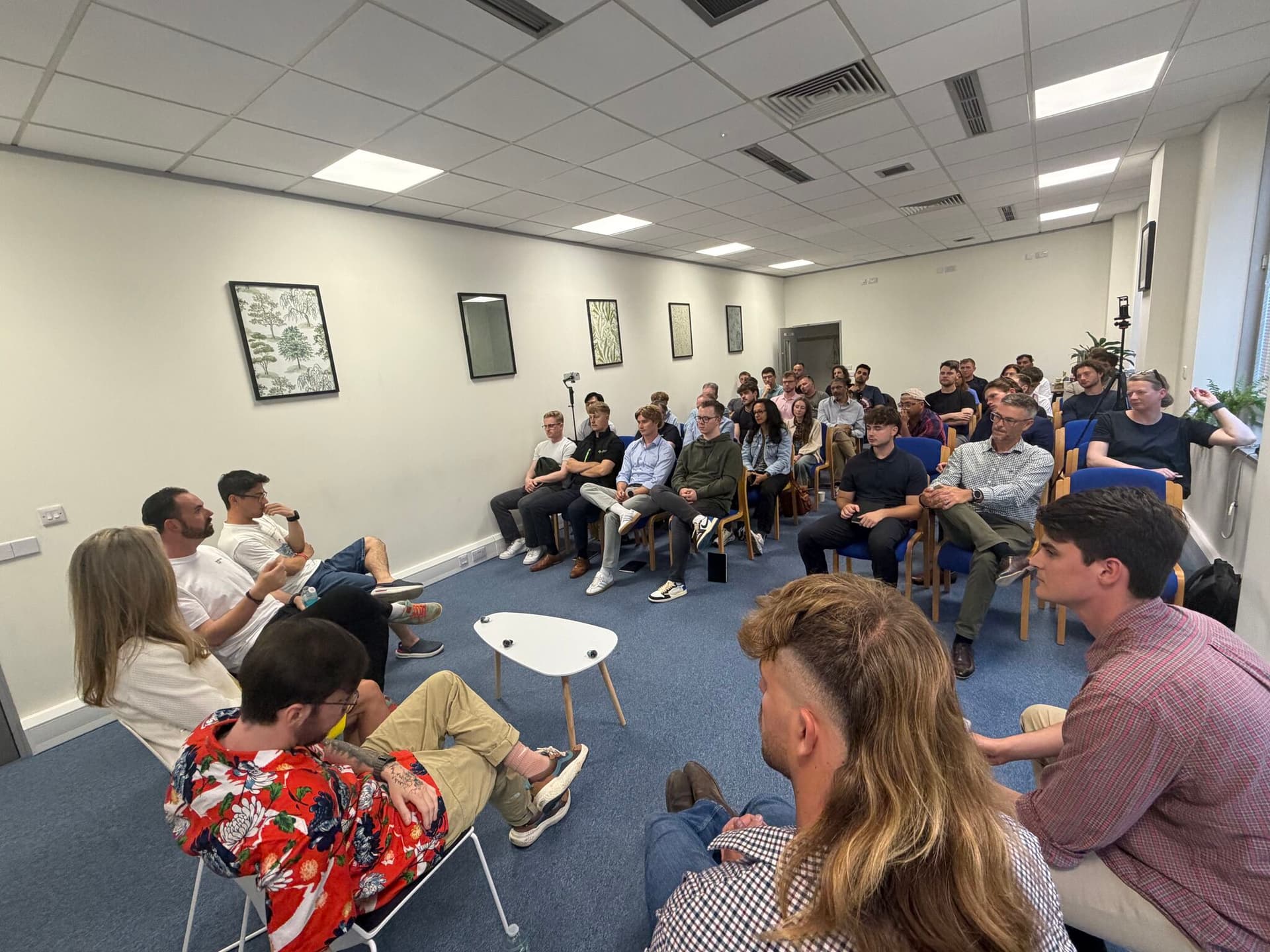
A pre-seed startup is a business at its earliest stage: little or no revenue, a small team or none, and an idea that has not been proven yet. Some pre-seed companies raise money. Many do not. What defines the stage is risk and uncertainty, not the size of the cheque.
That was the short answer from a founder panel we recorded live at Launchpad in Douglas. Four people who have built, funded and failed at this stage sat down for 36 minutes and skipped the theory.
Here is what they actually said.
Who was on the panel
Donovan Dall, co-founder of Nuffle Labs, raised 13 million for an earn app on cross-chain assets
Joshua Sinclair, 21, founder of SkinScanner.gg, raised just under half a million dollars in his first year
Jennifer Houghton MBE, investor, co-founder of Annexio, grew a lottery betting company from three people to 50 plus and exited in 2016
Jonny Quirk, ex-Yelp, ex-Deliveroo, ex-WeWork, now building DoSomethingElse.AI
Hosted by Massimo Formby and Percy Hampton
Key takeaways
Pre-seed means high risk and low certainty. Funding is optional. (4:31)
Cash at pre-seed signals belief, not proof. Your job is to make mistakes fast enough to find the direction that works. (5:00)
Build a painkiller, not a vitamin. Pain gives you the clearest signal you will ever get. (13:45)
Find 50 people who care enough to take your call. Get those right and they bring you 250. (17:06)
Underpricing hides the truth. Users paying real money will tell you when something breaks. (23:17)
Consumer products grow on virality. Infrastructure products grow on trust and time. (30:36)
What does pre-seed actually mean?
Donovan Dall gave the least glamorous definition of the night. A pre-seed company is scrappy. You might not know what you are building. You might be reacting to whoever is in your network. You may or may not have funding, depending on your sector and your comparables. And you will have, in his words, unnecessary amounts of confusion. (4:31)
Joshua Sinclair pushed the point further. Having cash does not mean you have answers. It means people believe in you. After that, the work is making as many mistakes as fast as possible, seeing what sticks, accelerating on that until it stops working, then finding the next thing. (5:00)
The three ideas the hosts opened with set the tone: you do not need everything to be perfect before you start, you can think bigger than your current environment, and starting young is an advantage rather than a gap on your CV. (1:00)
Where do good startup ideas come from?
Not always from expertise.
Jonny Quirk's first company, Beer Adventures, came from two things he liked: beer and adventures. Brewery tours already existed and people already spent money on them. He thought he could do it better with technology. The audience was built in. His job was to make it work more smoothly. (6:19)
For his current company he has no domain authority at all, and he says so openly. Instead he put two lead magnets into the world: a free AI risk checker and retraining roadmaps. Both fill a list of names and emails, and both tell him who his customer might be before he commits to a product. (6:52)
Joshua Sinclair split the question in two. He is building a price comparison tool for tradable in-game assets, essentially Skyscanner for gaming items. Did he know how to build that? No. Did he understand the community and care about it? Completely. His answer on domain knowledge was yes and no, and the passion half mattered more. (8:00)
What do investors look for at pre-seed?
Jennifer Houghton looks at the person first, then the idea. Her checks: (8:54)
Has the founder put the detail on paper, or is it still just talk?
Do the numbers stack up? Sometimes they simply are not profitable.
Does the founder have time? Someone running three ventures at once will run out of money.
Is there cultural and vision alignment between founder and backer?
How unique is the idea, and where is the energy and focus?
She also shared her five Ps, the framework she keeps coming back to: (10:27)
People, because it is rarely one person
Product, meaning something viable and distinct
Perfect timing, which never really is perfect, so you need some luck
Plenty of cash, because banks do not lend to businesses without traction
Patience and persistence, because turning funded into profitable usually takes far longer than founders expect
On red flags, her example was regulatory. A regulator once suspected her company of being a collective investment scheme. She sat in front of the financial supervisors with her hands under her legs because they were shaking. They won the argument, but it nearly ended the product. (12:14)
Painkiller or vitamin?
Donovan Dall's line was the sharpest of the night: pain is the purest form of clarity. (13:45)
Engineers like building things that are technically shiny and functionally optional. That is the vitamin. The cure is different. If you have a set of users with honest, painful problems, you can build around them, ship, and it will work. And the pain will not be unique to them. Other users will have it too.
He is blunt about the alternative because he has lived it. His team shipped something for nobody, pivoted, floundered, then ran out of money. His rule now is to build around real people with real problems, ideally close enough that you can go to their front door and watch them struggle.
Joshua Sinclair added the trap on the other side. You can validate a problem so narrowly that you end up fitting a solution to a handful of specific people rather than a market. Ask your dog if it wants an automatic food bowl and the answer is obviously yes. That does not mean the supply chain works. Better to walk into a domain and ask what the problems are, then build exactly what people describe. (15:32)
How do you get your first users with no budget?
Jonny Quirk gave the most practical framework of the session, built from years of community work. He calls it the first 50. (17:06)
Find 50 people who care enough to get on a call with you or fill in a survey properly. Not people bribed with a ten pound Amazon voucher, who will click A, B, C and forget you exist. Fifty people with real buy-in.
Then pick up the phone and ask deep questions. What is the problem right now? Where would your solution fit? What would you pay? How would you promote it? How would you want to be marketed to?
The maths is the point. If 50 people genuinely buy in, they tell five friends each and you have 250 potential customers. If they tell ten, you have 500. (18:30) That word-of-mouth route pulls your cost per acquisition down, pushes lifetime value up, reduces churn and lifts engagement. (18:40)
His warning attached to it: do not rush this part. Nobody picks up the phone anymore, so the relationship you build in that first 40 minute conversation is worth more than the speed you gain by skipping it. (18:01)
The panel agreed the hard part is quality, not quantity. Message someone on LinkedIn today and their guard goes up immediately, because everyone assumes a DM is a sales call. (20:36)
Go where your users already are
Joshua Sinclair's version is simple. If you want to sell beer, go to a pub. Find exactly where your customers live, breathe and spend their time, and the problems unravel themselves because people will tell you anything. (21:26)
Do it in person where you can. Tough conversations, board decisions and sales all land differently face to face, and you can read how someone actually feels. (21:50)
Jennifer Houghton extended that to geography. If your target market is London or Europe, you need to be in London or Europe. Isle of Man businesses in particular have to push out, because otherwise nobody knows what is being built here. (22:06)
The panel's related caution: do not over-index on locality. Ask early how portable the product is and whether it can travel. (22:35)
Why underpricing kills your feedback loop
This was the least obvious insight of the night. There is a difference between 50 users paying real money and 50 users you effectively bought for a dollar who cannot remember your app is installed. (23:17)
Fifty users paying 200 dollars a month will cry to you the moment something breaks. You do not need to fly out and meet them. Their anger does the work of a research programme. Underprice, and nobody complains, nobody reviews, and you learn nothing about your own product.
The follow-on was referral and affiliate schemes, described as the strongest early mechanism there is when the commission is meaningful, around 30 per cent. Get your first 50 right, and they become net promoters who can build a small business of their own on recurring referrals. (24:10)
Jennifer Houghton then supplied the counterweight from a company that failed. They used affiliates to push a product that was not ready. Affiliates sold hard, then started talking to each other and realised the promises were not being met. Revenue dropped to 20,000 within a month and staff had to be let go. Her lesson: do not switch on affiliates until the product is fit for purpose. (24:48)
What is K factor and why does it matter?
Jonny Quirk introduced it as one of the earliest metrics worth watching. K factor measures how many new users each existing user brings in. Industry standard sits around one to three, and an early stage investor uses it to see whether there is genuine virality in the product. (25:36)
Joshua Sinclair confirmed it from the gaming side. Hit a K factor of one, where every user refers one friend, and growth compounds fast. In his experience you might see 0.1 going from zero to 100 users, then something near one going from 100 to 1,000, and from there it behaves like compound interest. (26:55)
Donovan Dall's addition for web3 builders: get good at game theory early and build missionaries rather than users. Focus on five or ten fully paying, genuinely passionate people who understand the long-term vision and may hold equity or tokens. Those are the people who keep sharing. (27:23)
Growing a consumer product: the SkinScanner example
In September, SkinScanner had a Discord community of roughly 300 to 400 people. By six months later it had 22,000. (28:25)
The route there came from the ICP question. Counter-Strike players already use Discord constantly to talk to friends and organise matches, so Discord was where they lived. Once you know that, Joshua Sinclair says, forget revenue for a while and ask what these people actually want.
For his team the answer turned out to be more online tournaments. Simple, and something competitors missed because they were still thinking about cash extraction from what he calls a very immature market. Once you find the thing people love, do more of it until it snowballs. Then Discord itself starts taking you seriously and the growth compounds again. (29:27)
Growing an infrastructure product is a different game
Donovan Dall was clear that none of that applies if you are selling infrastructure. Nobody runs around telling their friends your blockchain or your AI infra is amazing. (30:36)
Infrastructure sells on reliability, trust, validity and simply still being there next year. (31:01) Your growth comes from technical founders and technical buyers telling other technical people, which is slow. (31:16)
His planning horizon reflects that. Expect little or no revenue in year one and think in terms of five to seven years. Know your comparables too, because if you are building a model serving platform your comparable is Anthropic, and that shapes every conversation you have with a VC. (31:22)
How Beer Adventures reached 25,000 downloads with no funding
Jonny Quirk bootstrapped Beer Adventures to 25,000 app downloads out of his own pocket. Two levers did most of it. (32:15)
The first was SEO at scale. They built large numbers of pages with parent and child categories, so wherever you travelled there was a page for the brewery tour or beer tour in that place, pulling people into the top of the funnel. His view is that SEO still works today, even with Google changing under the pressure of AI. He is running the same play now with thousands of pages answering questions like whether a given industry is at risk from AI. (32:49, 34:02)
The second was borrowing other people's audiences. They ran interview series with brewery owners and with the artist behind Beavertown's artwork, anything more interesting than what they were doing themselves, then embedded their own banners in that native content rather than running ads. (33:27)
His practical note on partnerships: be aspirational but realistic. Someone with five million followers will not notice you at 100 followers. Someone with 5,000 will do a shared page with you, and you both grow. (34:25)
The part nobody puts on a pitch deck
The session closed on persistence. Most founders who fail simply stop too early. (35:27)
Being a pre-seed founder is lonely. You wear every hat, you work at night, and a good week might mean three new Instagram followers. (35:35)
Companies that appear to come from nowhere did not. Only the founders know how many hours sit behind the launch you eventually noticed. That is why 10,000 users or 25,000 downloads means so much to the person who built it. (36:03)
FAQ
What is a pre-seed startup?
A pre-seed startup is a company at its earliest stage, before proven product-market fit and usually before meaningful revenue. It is defined by uncertainty and risk rather than by funding. Some pre-seed companies raise money from angels or accelerators, and many are self-funded. (4:31)
Do you need domain expertise to start a company?
Not necessarily. Two of the panellists built in areas where they had no technical domain knowledge but deep understanding of the community and the problem. Passion for the users and their problem carried more weight than prior expertise. (8:00)
How do you get your first users without a marketing budget?
Find 50 people who care enough to take a call or complete a proper survey, and build real relationships with them. If those 50 are the right people, they refer five friends each, giving you 250 warm prospects and a much lower cost per acquisition than paid channels. (17:06)
What is a good K factor for an early stage startup?
The panel put the industry standard at roughly one to three. A K factor of one means every user brings in one more user, which is the point where growth compounds on its own. Above three is rare and a strong signal. (25:36)
Should you charge for an early product or give it away free?
Charge. Users paying real money will complain loudly when something breaks, which gives you honest feedback for free. Users on a token price will forget your product exists and tell you nothing. (23:17)
What do investors look for before there is any traction?
The founder before the idea. Detail written down, numbers that stack up, enough time committed to the venture, alignment of vision and culture, and a genuinely distinct proposition. (8:54)
Watch the full session
Recorded live at Launchpad, the Isle of Man's startup hub. If you are building something and want a room full of people who have done it before, come and find us in Douglas.
Source: Pre-Seed Startups Explained: 4 Founders on What Actually Works, Launchpad, 21 July 2026. All timestamps link to the relevant moment in the recording.
Related Articles

General5 min read
Techstars Startup Weekend Douglas is a finalist for Education and Learning Initiative of the Year at the Media Isle of Man Awards for Excellence 2026
Techstars Startup Weekend Douglas, hosted at Launchpad, is a finalist for Education and Learning Initiative of the Year at the Media Isle of Man Awards for Excellence 2026. See what participants learnt in 54 hours.
General5 min read
Cloud Computing for Small Business: What Every Isle of Man Founder Should Know
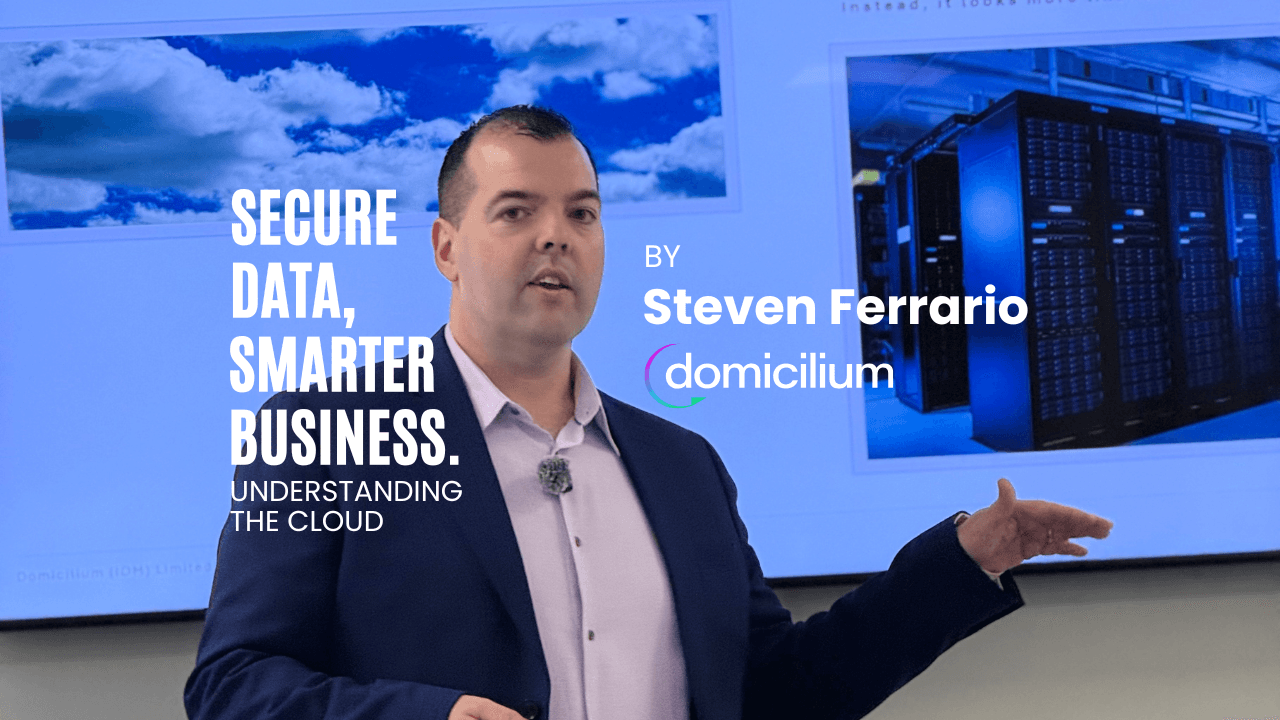
Public, private or shared cloud? What Isle of Man founders need to know about cloud risk, AI data and data sovereignty, from Domicilium's Steven Ferrario.
Ready to Join Launchpad?
Experience the co-working difference. Book a tour or sign up for a membership today.