Back to Blog
General9 min read
This Wasn't The Plan: Why Neurodiversity Is A Governance Issue, Not Just A Wellbeing One
Mitzi runs an independent governance, risk and compliance consultancy. She works with regulated businesses across anti-money laundering, AI and wider regulatory compliance. She's also ADHD and autistic. At a recent Launchpad event, she stood up and said something most speakers on this topic don't say: this isn't a wellbeing talk, and it isn't asking anyone to feel sorry for neurodivergent people.
18 August 2026
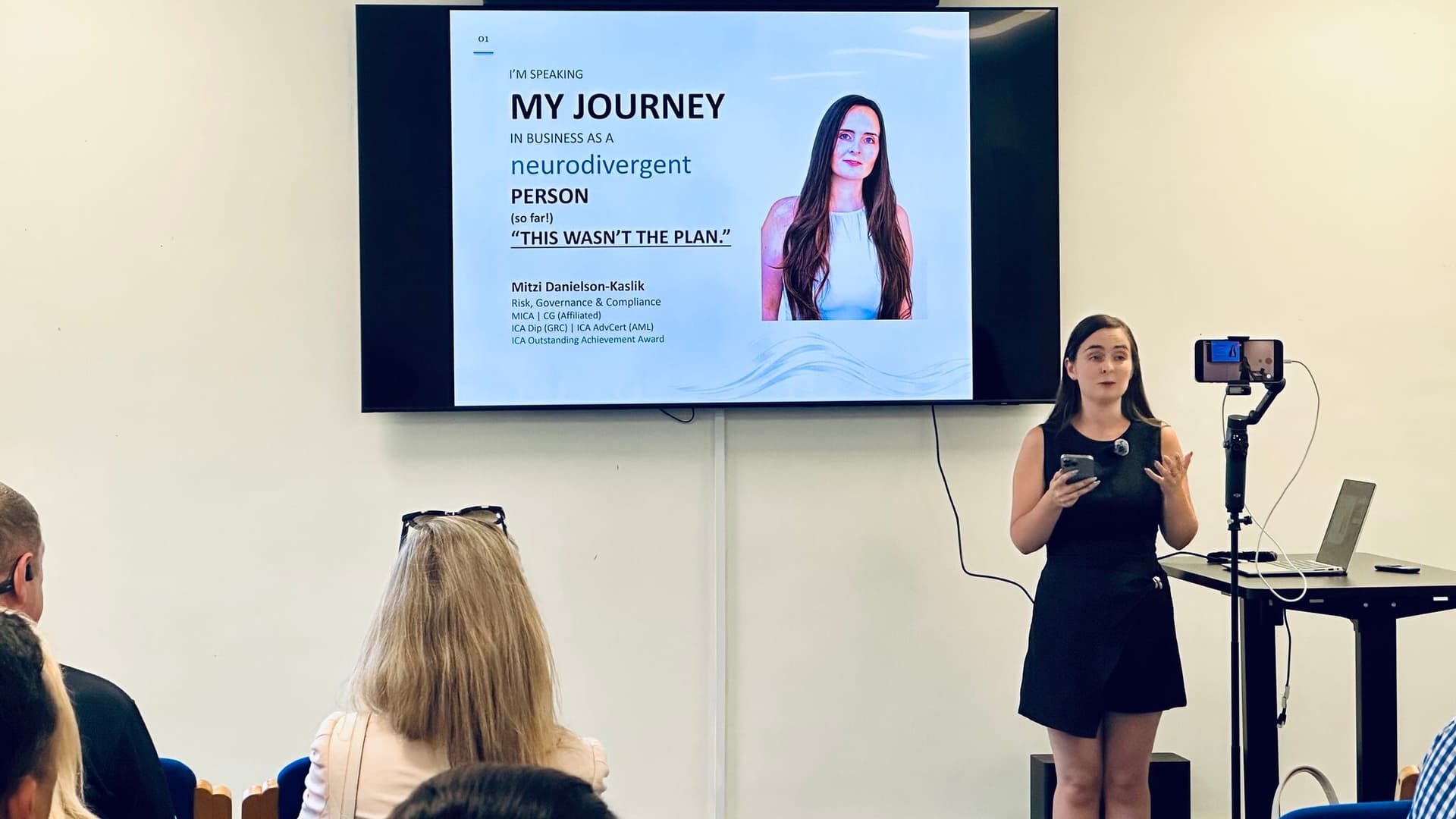
Mitzi Danielson-Kaslik runs an independent governance, risk and compliance consultancy. She works with regulated businesses across anti-money laundering, AI and wider regulatory compliance. She's also ADHD and autistic. At a recent Launchpad event, she stood up and said something most speakers on this topic don't say: this isn't a wellbeing talk, and it isn't asking anyone to feel sorry for neurodivergent people.
Her point was simpler and harder to argue with. In her words, neurodiversity is "a commercial issue, a governance issue and an innovation issue." Businesses that understand how different brains actually work build better businesses. Full stop.
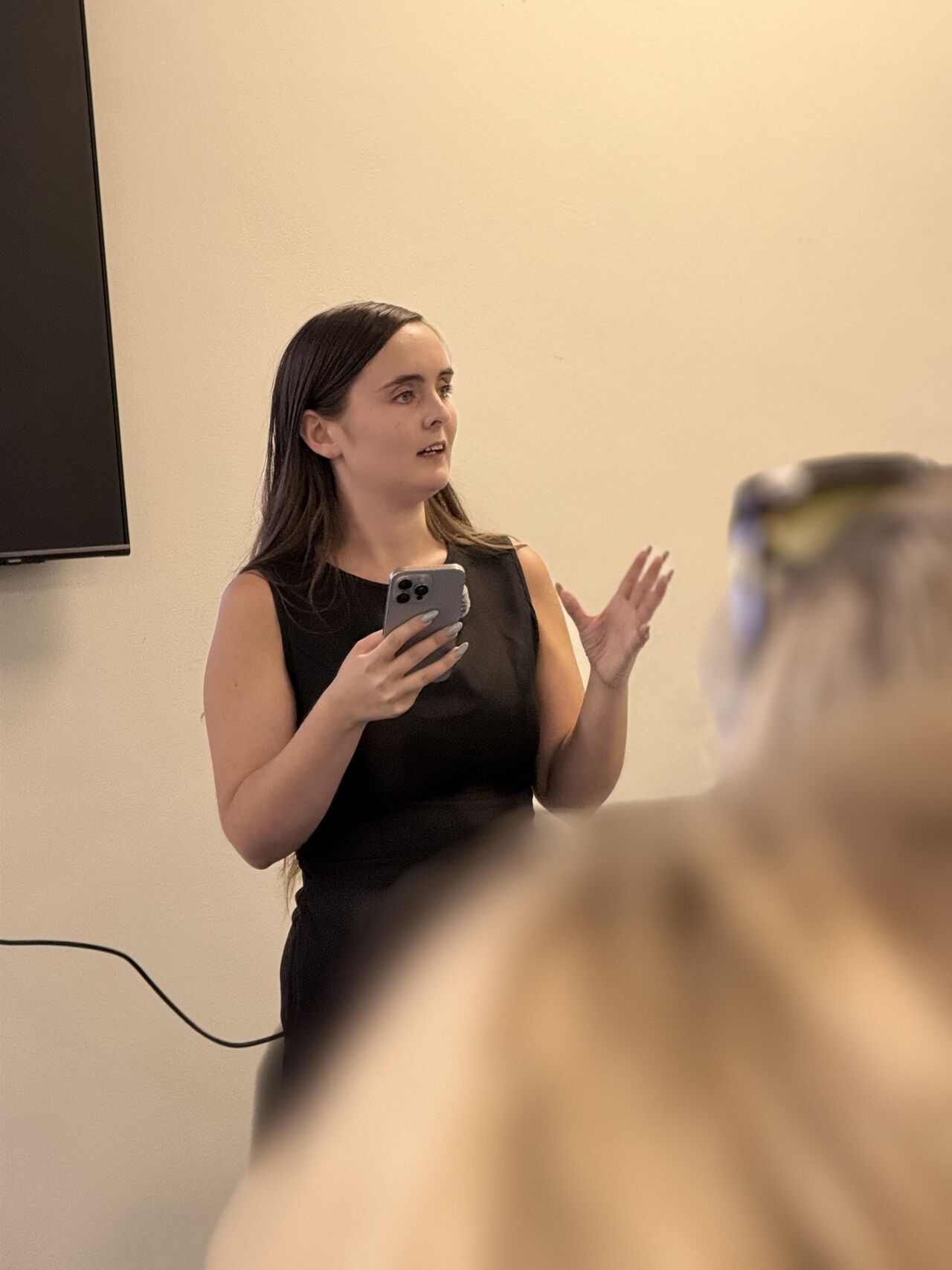
Watch the full talk
You can watch Mitzi's complete talk, "This Wasn't The Plan," on YouTube: watch here
This session covers her career, her late diagnosis at 22, and what she believes leaders get wrong about neurodivergent talent. This article covers the key points, but the talk itself carries the detail and the humour that a summary can't.
A career built on being the wrong shape for the room
Mitzi planned to become a lawyer. She loved research, pattern-spotting and pulling a complicated problem apart until she understood it. Law rewards exactly those traits, which is part of why she says there's a disproportionate number of neurodivergent people in legal careers, particularly those diagnosed later in life.
She describes herself as a triangle in a world built for squares. You can force a triangle into a square hole. Do it often enough, though, and the corners wear off.
At 15 she wrote her first novel. It was published when she was 17. She sat the ELAT, the English Literature admissions test, and was offered a place at King's College London. Then she turned it down. Halls, freshers' week and constant socialising sounded exhausting rather than exciting, and she couldn't shake the feeling that it wasn't the right environment for how she works.
She calls that decision one of the first genuinely autistic choices she made, years before she knew she was autistic. It meant asking a different question: not what does everyone else think I should do, but what do I actually want to do. She makes the same point to the businesses she advises now. Companies often hire the person with the best CV or the strongest interview, rather than asking who is actually right for the job. That's a governance question as much as a people one.
Lockdown, caring, and the discovery that "the way we've always done it" was a choice
Mitzi was 16 when GCSEs were cancelled in 2020. She'd built her whole plan around exams as a finish line, and suddenly there wasn't one. What she noticed, looking back, is that she copes fine with change. What's harder is uncertainty: not knowing the rules of the game.
Around the same time, she was caring for her grandad, who had a form of dementia. She believes he was very likely autistic himself, though he was never diagnosed. His generation didn't have the language for it. He was just "different," and he got on with it. Caring for him taught her that resilience rarely looks dramatic. It looks like making a cup of tea, going to Tesco's, and getting up the next day to do it again.
It also taught her something she now tells business leaders directly: you don't know what someone is carrying unless you take the time to find out. She was studying for A-levels and caring for a dying relative at the same time, and from the outside her life looked completely normal.
Instead of university, she chose the Open University, which let her build her education around her life rather than the other way round. She now works with the Open University delivering accessibility training, which she says still makes her smile.
Falling into compliance by accident
Mitzi volunteered as an appropriate adult with the police, supporting vulnerable people in custody. Most of the people she supported had ADHD, and listening to them describe their experiences, she kept thinking: I do that too. She dismissed the idea completely. Her image of ADHD was "little boys bouncing off walls," and that wasn't her.
Then someone she was supporting said, plainly, "I think you've got ADHD." She didn't act on it immediately, but the question stuck.
Not long after, at the job centre, an advisor asked her a question that changed her career: had she ever thought about financial services? She hadn't. She applied for a compliance assistant role without reading the job description properly, and sat in the interview trying to silently sound out the word "fiduciary," which she'd never seen before. She got the job. A week later she was Googling "what does AML stand for" on a work computer.
That's the part she comes back to most often when people call her an expert. She isn't one because she arrived knowing everything. She's one because she was willing to ask.
Diagnosis, and losing her job in the same 48 hours
At 22, after years of exhaustion she couldn't explain, medical investigations unrelated to ADHD led a clinician to ask if she'd ever been assessed. She had a private assessment (adults on the Isle of Man pay for their own ADHD and autism assessments) and met all 24 criteria for ADHD.
She told her employer, believing openness would lead to a sensible conversation about how to move forward. She lost her job two days later. She doesn't go into detail, since parts of it remain unresolved, but she's clear about how it felt: she'd finally found the missing piece of the puzzle, and then the table disappeared.
That same week, she had her first seizure. Months of investigation led to a diagnosis of functional neurological disorder, specifically non-epileptic seizures linked to trauma. Her framing of it is direct: her body was trying to protect her, the way vomiting protects you when you're unwell. Mind and body aren't separate systems. What you don't process in one place gets carried in another.
Building a business instead of sending out CVs
Facing no job and a fresh diagnosis, Mitzi decided against months of job applications for roles she probably wouldn't enjoy. She built her own consultancy instead. No clients, no guaranteed income, just a laptop.
Her business line, "clarity where it counts," came out of a conversation with a paramedic who was astonished she'd known to call for help during a seizure. Her answer: because I have clarity. I know something's wrong, so I act on it.
Her market logic is straightforward. No business needs a governance consultant sitting in the corner full-time. Almost every business needs one occasionally, when regulation changes, when they're growing, or when something's gone wrong. She built her consultancy around that gap. It's now booked months in advance.
She went on to win the ICA Outstanding Achievement Award in AML, achieving the highest global mark in the ICA Advanced Certificate in Anti-Money Laundering, the first person from an offshore jurisdiction and the first under 30 to do so.
Why this matters for your business, not just for neurodivergent employees
Mitzi's central argument is that "we treat everybody the same here" sounds fair but usually isn't. She compares it to giving a 5'3" person and a 6'4" person identical bicycles. One of them is going to have a far more difficult ride. Equality isn't sameness. It's making sure everyone has a genuine chance to perform well.
A few practical points she raises for leaders and organisations:
Masking is exhausting and mostly invisible. Many neurodivergent employees spend more energy appearing to cope than actually doing the work. You won't see it in performance reviews.
Recruitment built around CVs and interview performance filters out people who'd be excellent at the job but poor at performing for 45 minutes in a room. Ask what the role actually requires, not who presents best.
Psychological safety isn't a soft add-on. People rarely say "I'm struggling" until they're already burnt out. If your culture doesn't make it safe to say it earlier, you'll find out about problems later and at greater cost.
Flexibility isn't a compromise on standards. The pandemic proved that remote work, flexible hours and written communication were possible all along. They just hadn't been chosen.
A diagnosis doesn't lower expectations. Mitzi says hers raised her own. Understanding how your brain works lets you stop spending energy pretending to be someone else and start building a working life around who you actually are.
Questions this talk answers
Is neurodiversity a wellbeing issue or a business issue?
Both are involved, but Mitzi argues the business case matters more than the sympathy case. Organisations that understand different ways of thinking build better governance, spot risk more effectively and get better ideas. Treating it purely as a wellbeing add-on undersells what's actually at stake commercially.
What is masking, and why does it matter at work?
Masking is suppressing or hiding traits to appear more "typical." It might look like forcing eye contact, rehearsing small talk, or replaying conversations afterwards to check you got it right. It takes a huge amount of energy and is often mistaken for someone simply being professional or composed.
Does ADHD medication change your personality?
No. Mitzi describes it as quietening background noise rather than becoming a different person. It doesn't give her a better brain. It helps her use the one she already has, without wasting energy fighting it.
Should businesses treat every employee identically?
No, according to Mitzi. Identical treatment isn't the same as fair treatment. The goal is giving everyone a genuine opportunity to do their best work, which sometimes means different accommodations for different people.
Why did Mitzi turn down a place at King's College London?
The course itself wasn't the issue. The environment was. Halls, freshers' week and constant socialising didn't suit how she works. She chose the Open University instead, which let her study around her life, including caring responsibilities for her grandad.
What does "clarity where it counts" mean?
It's the tagline for Mitzi's consultancy, born from a conversation with a paramedic about recognising when something is wrong and acting on it immediately, rather than waiting or second-guessing.
In her words
Mitzi sums up her own thesis this way: stop asking whether neurodiversity is a strength or a weakness, and start asking what environment allows a person to work at their best. That's the question she asks the businesses she consults for, and it's the question behind this entire talk.
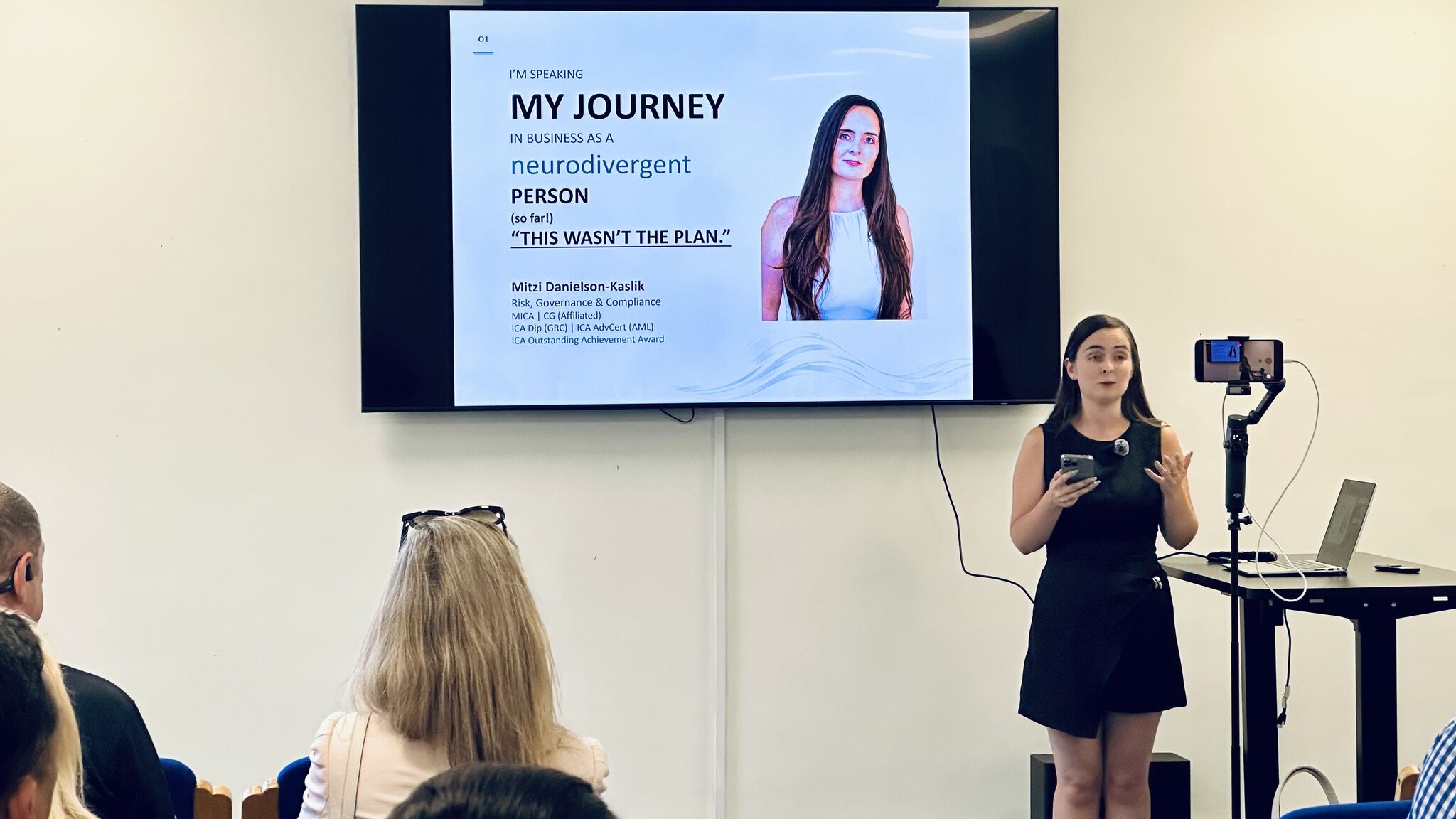
Watch the full talk on YouTube: https://www.youtube.com/watch?v=wofX3jfwThg
This article was written for Launchpad, based on Mitzi's talk "This Wasn't The Plan." on 08 July 2026.
Related Articles
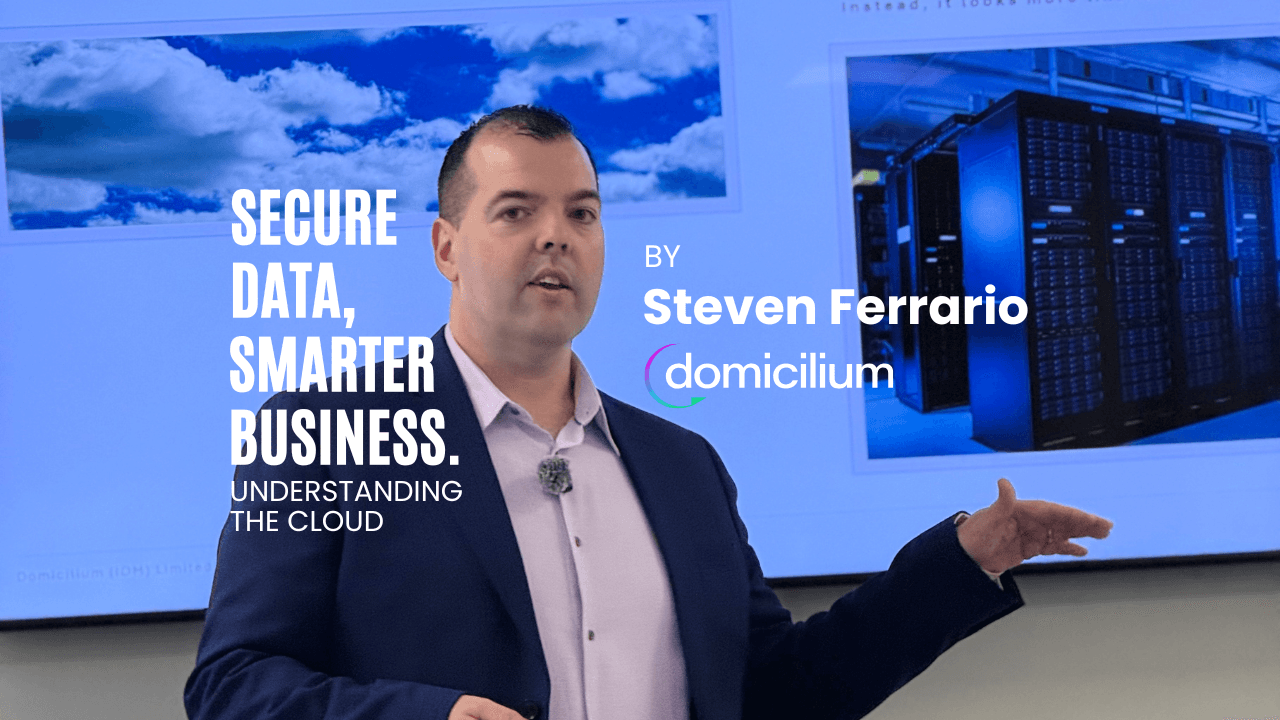
General5 min read
Cloud Computing for Small Business: What Every Isle of Man Founder Should Know
Public, private or shared cloud? What Isle of Man founders need to know about cloud risk, AI data and data sovereignty, from Domicilium's Steven Ferrario.
General11 min read
Startup to Scale-Up: 10 Lessons from ClickMechanic's Andrew Jervis
Andrew Jervis grew ClickMechanic from a £5 domain to a UK-wide marketplace. What he learned about trust, hiring, funding and scaling, from our fireside chat.
Ready to Join Launchpad?
Experience the co-working difference. Book a tour or sign up for a membership today.