Back to Blog
General5 min read
Good governance and founder wellbeing: a guide for Isle of Man startups
Starting a business on your own is one of the loneliest things you can do.
23 June 2026
Starting a business on your own is one of the loneliest things you can do.
You carry every decision. You feel every setback. And most of the time, you haven't told a soul how hard it actually is.
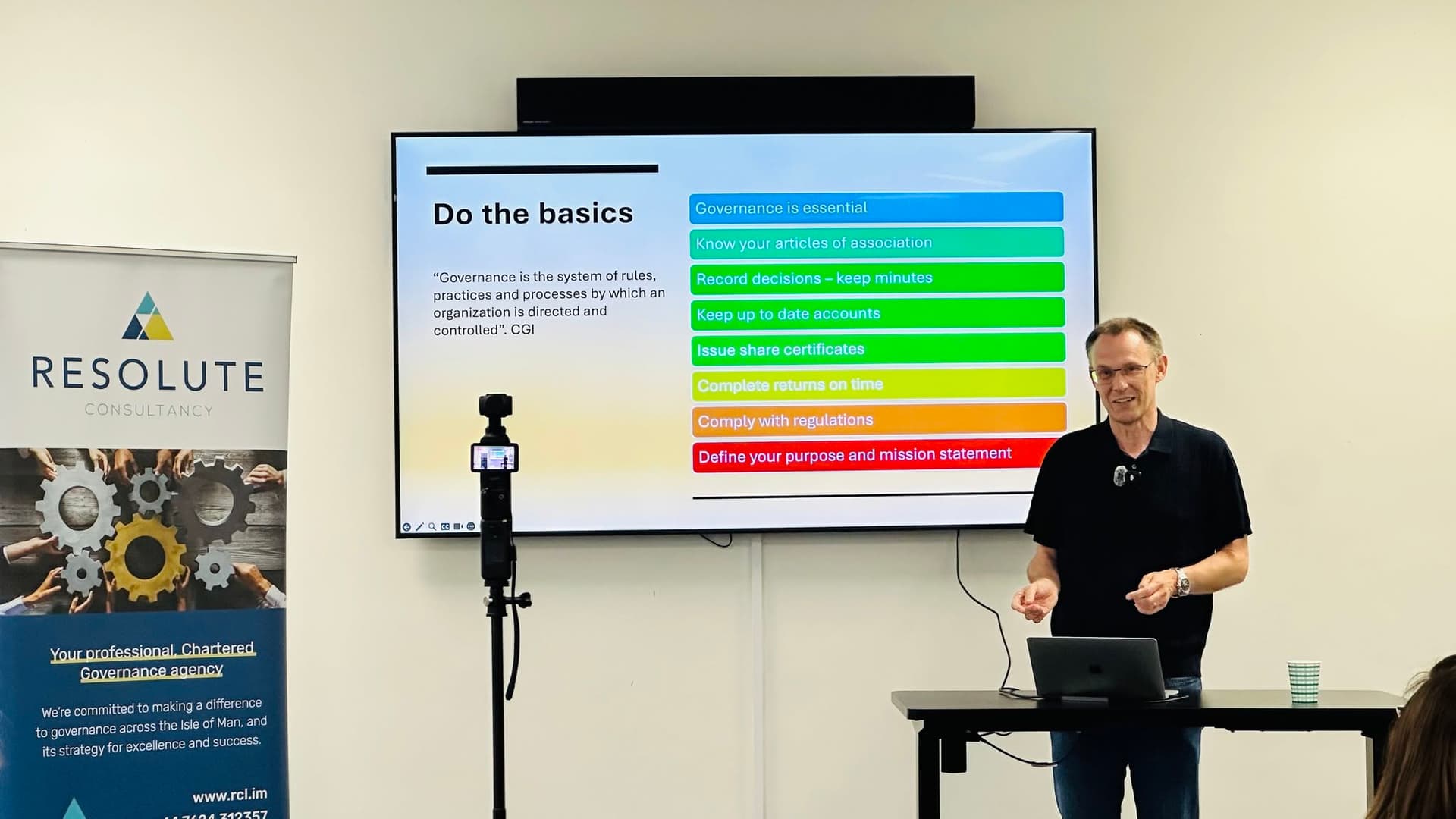
We hosted a talk at Launchpad on good governance and positive wellbeing for small businesses. Juan Moore of Resolute Consultancy Limited, a chartered governance professional and recent president of the Isle of Man branch of the Chartered Governance Institute, walked a room of local founders through it.
The talk covered two things every founder needs and most quietly ignore. Running your company properly. And looking after yourself while you do it.
Here's what stood out.
Get the basics right from day one
Most companies on the Island are 1931 Act companies. That brings a few duties you cannot skip, even as a team of one.
You need two directors. One can be someone outside the business.
Hold your directors' meetings and keep minutes.
Know your articles of association. They set how your company runs, and yours can have details specific to you.
Keep your accounts current. Check them monthly, more often if you can.
Issue your share certificates. You own shares, even as a sole founder.
File your annual return on time. Late fees pile up fast for nothing.
Stay insured and understand what your policy actually covers.
Write down your purpose. Why did you start?
Get these right early and you save yourself money, stress, and a lot of catching up later.
Minute your decisions, even when it's just you
This one surprised the room. You still need minutes when you work alone.
Recording your decisions feels odd when you are the only person at the meeting. It matters anyway.
Minute your approvals. Dividends, contracts, authority to sign letters of engagement.
Do it in the right order. Hold the decision, minute it, then act. Minutes written years after the event do not hold up, and a lawyer will say so.
A written resolution signed by your directors works well as a record.
Why bother? Because the day you sell shares, bring in an investor, or prove a patent belongs to the company, clean books and minutes are what people want to see. They show you have run things properly.
You can do minutes yourself. Plenty of free templates exist online.
The part founders don't talk about
Around 37% of founders report struggling with anxiety. Our speaker thought the real figure was higher.
Part of the problem is identity. You pour everything into the business, so when it wobbles, you feel like you have failed as a person. That stops a lot of people from speaking up.
Burnout and giving up too early are two of the biggest reasons businesses fold. Not the market. Not the product. The founder running out of road.
Watch for the warning signs:
Putting off tasks you used to handle without thinking
Losing interest in things you enjoyed
Eating too much or skipping meals
Working every evening and weekend
Getting snappy over small things
Broken or disturbed sleep
Stress creeps up slowly. You often miss it in yourself, which is why having someone who can spot it matters.
What actually helps
The fixes are simple. The hard part is doing them when you feel you have no time.
Take real breaks. Walk at lunch. Step away from your desk for ten minutes.
Vary your tasks when you are stuck. The answer often arrives once you stop forcing it.
Set targets and hold yourself to them.
Move and eat properly. Both help your sleep, your focus, and your mood.
Have someone to talk to. A partner, a mate, or another founder who understands.
Be proud of your wins. Put them in your marketing. We are bad at this on the Island.
Remember your purpose when things get heavy.
When you grow, look after your team
Hiring changes things. Over half of startup employees report struggling, and burnout hits staff harder than founders. They carry the workload without the control you have.
A few habits protect them:
Set your office culture early. If you work late, your team will feel they should too.
Empower people and let them do the job. Resist the urge to micromanage.
Ask staff what benefits they want rather than guessing. Flexible hours and home working go a long way.
Get your HR and policies right from the start. Contracting out the HR function is worth a look.
One case from an Australian coroner's inquest made the point hard. A workplace that ignored bullying changed a person's life far beyond the office. What happens at work follows people home.
The bigger picture on the Island
These numbers are difficult to read, and worth sitting with.
Between 2020 and 2024, 68 people on the Isle of Man died by suicide. That is more than one a month over five years. The crisis team takes around 2,000 calls a month.
Poor mental health also carries a heavy cost to local business and to the Island as a whole. Get wellbeing right and you protect both your people and the work you have built.
Where to get support
You do not have to work this out alone.
The Department for Enterprise runs startup and business schemes, free advice, and training on governance, VAT, and director duties. The startup support can help you buy equipment and get going.
ManSPACT (Manx People Action and Change Together) is a free peer support group founded by Juan, with regular updates and a place to talk while you wait for other services.
For mental health support on the Island, Manx Care and Isle Listen can help. The Samaritans are on 116 123, free from any phone, day or night.
The real message
Good governance and good wellbeing are not two separate jobs. They protect the same thing: the business you have worked so hard to start.
Launchpad is a community of founders, freelancers, and mentors on the Isle of Man. If you are starting something and have not told anyone yet, this is the place to say it out loud.
The door is open whenever you're ready.
Want to get your governance and compliance straight? Launchpad members can claim a free one-hour consultancy: https://www.discoverlaunchpad.com/perks/free-1-hour-consultancy-on-governance-compliance
Got a question, or want to swap notes with other founders? Join the conversation in our discussion forum: https://www.discoverlaunchpad.com/discussions
Related Articles
General11 min read
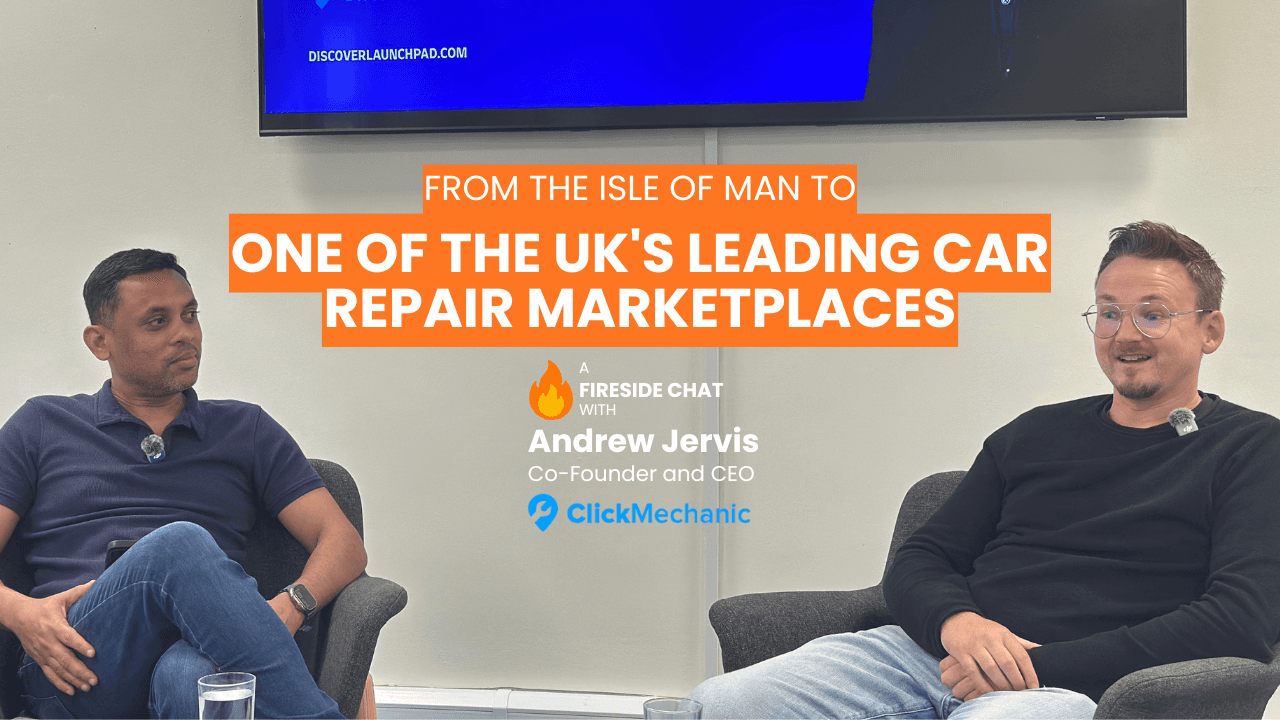
Startup to Scale-Up: 10 Lessons from ClickMechanic's Andrew Jervis
Andrew Jervis grew ClickMechanic from a £5 domain to a UK-wide marketplace. What he learned about trust, hiring, funding and scaling, from our fireside chat.
General14 min read
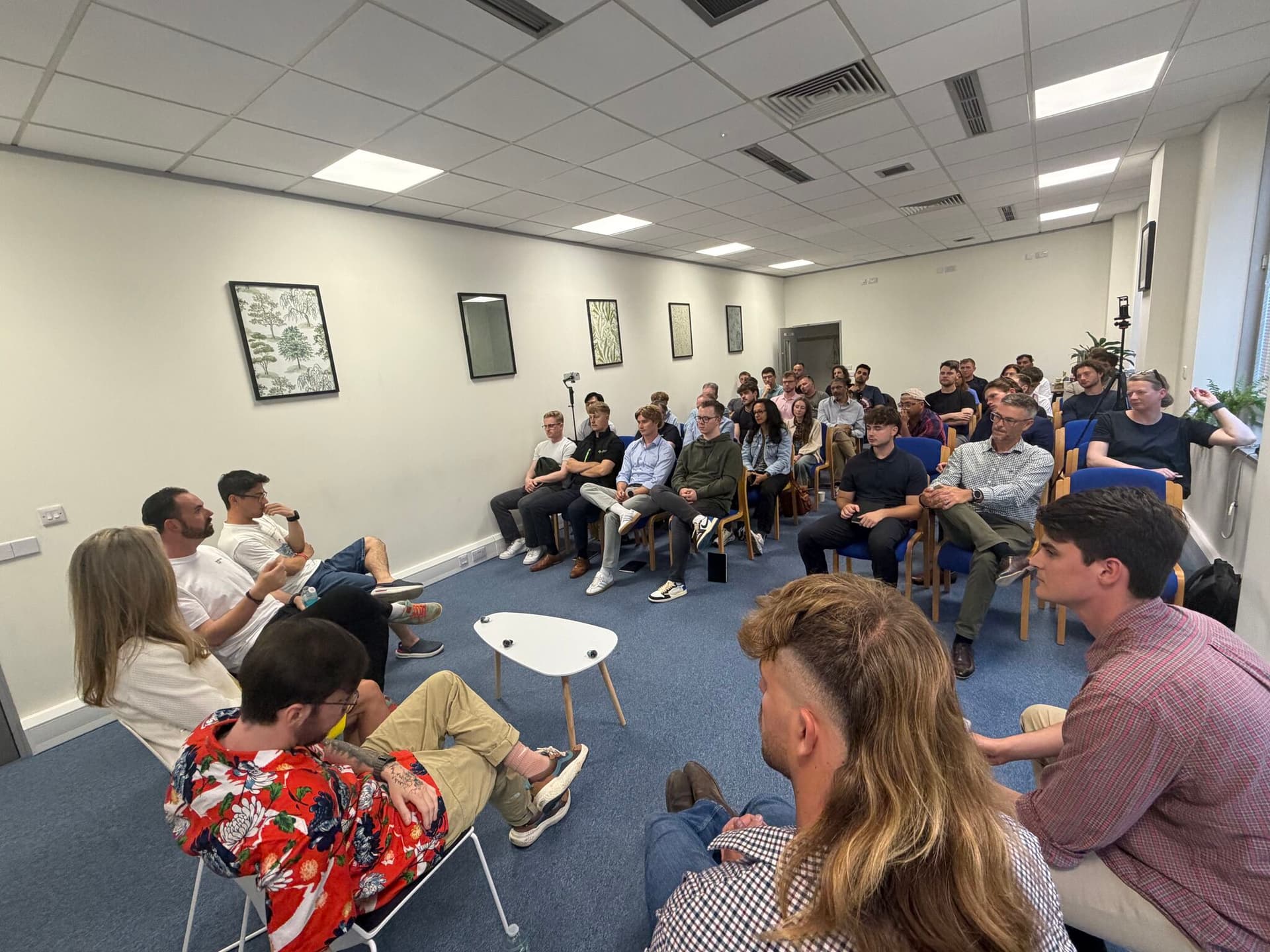
What Is a Pre-Seed Startup? 4 Founders on What Actually Works
Four founders explain what pre-seed really means, how to find your first 50 users, when pricing forces honest feedback, and how to grow with no budget. Recorded live at Launchpad, Isle of Man.
Ready to Join Launchpad?
Experience the co-working difference. Book a tour or sign up for a membership today.