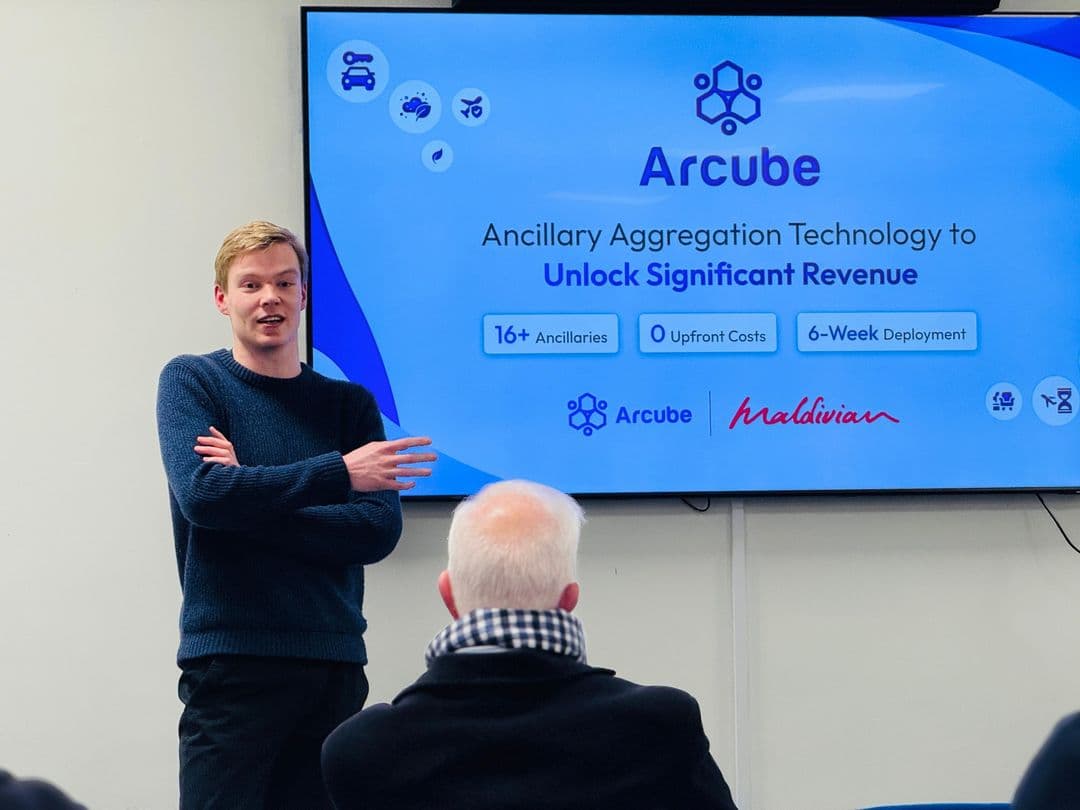
Building a venture-scale company is usually portrayed as a complex, decade-long grind. Last week at Launchpad, Harvey Lowe showed how he compressed that timeline into three years.
At 21, Harvey is the founder of Arcube. Since starting the company at 18, he has secured a £1.5 million investment round, achieved a £5 million valuation, and signed global enterprise clients.
The session wasn't a celebration of luck; it was a breakdown of strategy. Here are the four core mechanics Harvey used to scale Arcube.
1. The Audacity of the First Sale
The standard advice for early-stage founders is to start small: get a local SME on board, prove the concept, then move up.
Harvey ignored this. At 18 years old, with an MVP (Minimum Viable Product) and zero enterprise track record, he targeted Etihad Airways.
He didn't win the contract because of his resume. He won it because he identified a high-value problem that incumbents were ignoring.
The Insight: Enterprise clients are rational economic actors. They do not care about the age of the founder or the size of the office. They care about the solution. If you solve a £100k problem, the market will pay you £100k. Harvey proved that you do not need "permission" or a 50-person team to hunt elephants.
2. Traction De-Risks Fundraising
Raising capital is often viewed as a persuasion game. For Harvey, it was a traction game.
When he approached investors for his £1.5m seed round, he wasn't pitching a hypothetical scenario. He was pitching a business that already had one of the world's largest airlines as a client.
The Insight: Investors are looking to minimise risk. The most effective way to raise money isn't to have a better slide deck; it's to have customers. By securing revenue first, Harvey shifted the dynamic from "asking for money" to "offering an opportunity."
3. Velocity of Learning > Years of Experience
Before Arcube, Harvey ran an eCommerce business that he sold at 17.
While the exit gave him capital, its real value was the iteration cycle. He had already learned how to build, sell, and exit before most of his peers had started university.
The Insight: In the startup world, "experience" is often a vanity metric. What matters is the velocity of learning. A founder who launches and iterates on three projects in two years will often outpace a founder who spends five years planning one. Harvey’s speed of execution was his primary competitive advantage.
4. Leveraging the Ecosystem
During the session, Harvey highlighted how he utilised the Isle of Man’s specific environment to move faster.
He didn't treat the location as a limitation, but as a high-access network. He used the tight-knit ecosystem to get immediate access to decision-makers and high-net-worth individuals, bypassing the layers of bureaucracy found in larger markets.
The Insight: Use your environment. If you are in a smaller ecosystem, use the accessibility to your advantage. Speed of communication often translates to speed of business.
Summary
The Arcube story is a case study in focus. Harvey didn't wait for the perfect conditions. He built a product, sold it to the biggest customer he could find, and used that momentum to fund the next stage of growth.
The roadmap is permissionless.
Watch the full session recording here:
Related Articles
General11 min read
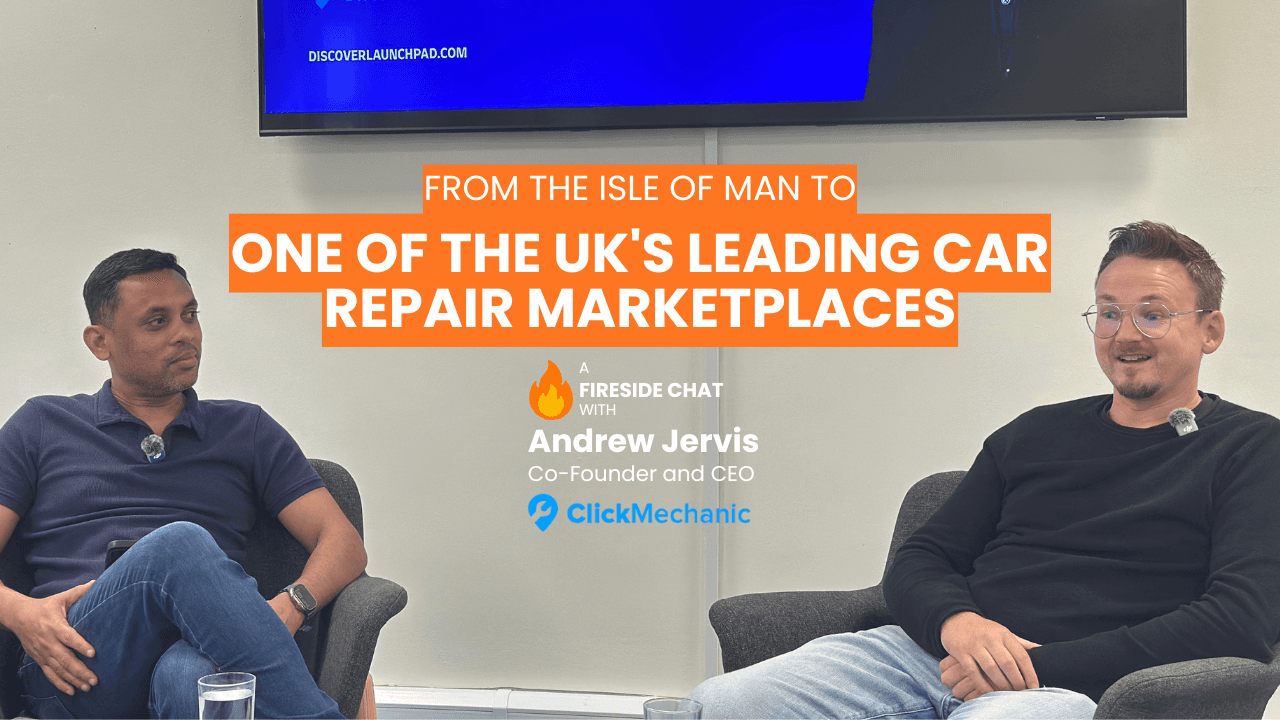
Startup to Scale-Up: 10 Lessons from ClickMechanic's Andrew Jervis
Andrew Jervis grew ClickMechanic from a £5 domain to a UK-wide marketplace. What he learned about trust, hiring, funding and scaling, from our fireside chat.
General14 min read
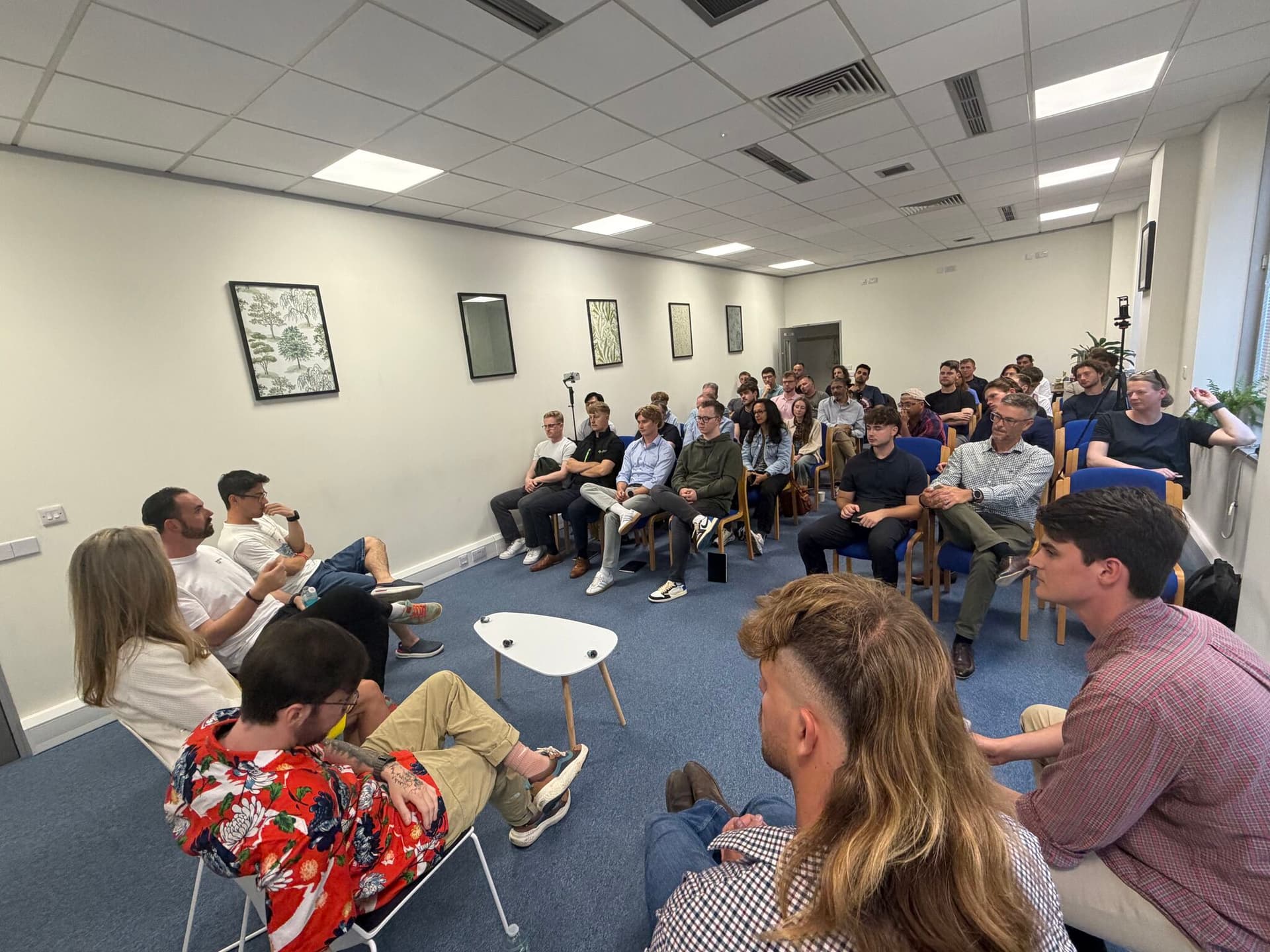
What Is a Pre-Seed Startup? 4 Founders on What Actually Works
Four founders explain what pre-seed really means, how to find your first 50 users, when pricing forces honest feedback, and how to grow with no budget. Recorded live at Launchpad, Isle of Man.
Ready to Join Launchpad?
Experience the co-working difference. Book a tour or sign up for a membership today.